PropFlow
A property maintenance management platform built as a NestJS monorepo, developed phase by phase as a deep-dive into event-driven microservice architecture — from the first REST endpoint to Kafka streaming, LLM-powered triage, the transactional outbox and JWT auth.
Source: github.com/mhayk/propflow
Architecture
flowchart LR
    Client([Client]) --> GW[API Gateway]
    GW --> WO[Work Orders Service]
    GW --> PR[Properties Service]
    GW --> AU[Audit Service]
    WO -->|domain events| MQ[(RabbitMQ)]
    WO -->|audit stream| KF[(Kafka)]
    MQ -->|created events| WO
    MQ --> NT[Notifications Service]
    KF --> AU
    WO -.->|triage| AI[Anthropic API]
    WO --> DB1[(PostgreSQL)]
    PR --> DB2[(PostgreSQL)]
    AU --> DB3[(PostgreSQL)]
Each service owns its data (database-per-service). Queries travel synchronously through the gateway; side effects travel asynchronously as domain events — staged in a transactional outbox, fanned out by RabbitMQ, retained forever by Kafka.
See it running
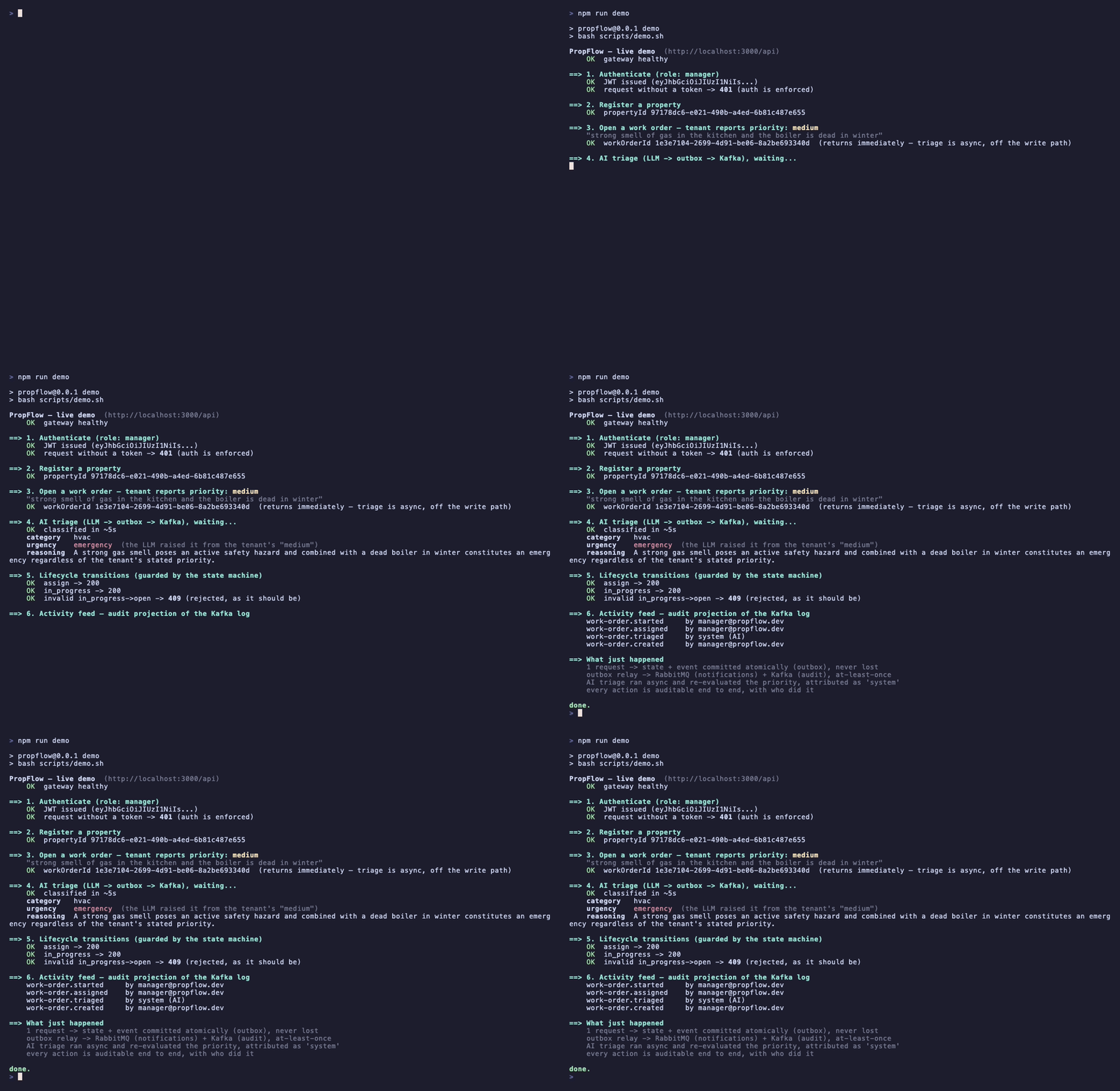
npm run demo drives the whole platform through the gateway: it opens a work order whose tenant understates the priority as medium, and the LLM re-evaluates it to emergency — then the state machine runs and the audit feed prints every event attributed (human vs. system (AI)). Auth, the state machine, the outbox, both brokers, the audit projection and AI triage, end to end:
Reading guide
- Services map — each service's mission, its world in a diagram, and its explicit non-responsibilities.
- Design patterns — every pattern in the codebase, where it lives, and the ones deliberately left out.
- Running on GCP — how the platform would map onto Google Cloud, and how little code moves.
- API reference — every endpoint with its required role; interactive OpenAPI at
/api/docson a running gateway. - Sequence flows — how actors and services interact, diagram by diagram: auth, the write path, the outbox relay, event fan-out, AI triage, retries/DLQ, composition, the activity feed, and the work-order state machine.
- ADRs — every significant decision and the trade-offs behind it.
- Study notes — the concepts each phase exercises, written as it was built.
- Known limitations & planned work — the deliberate gaps and what would close each, led by the technician/assignee registry.